
Building Trust at Impala Terminals
Client context
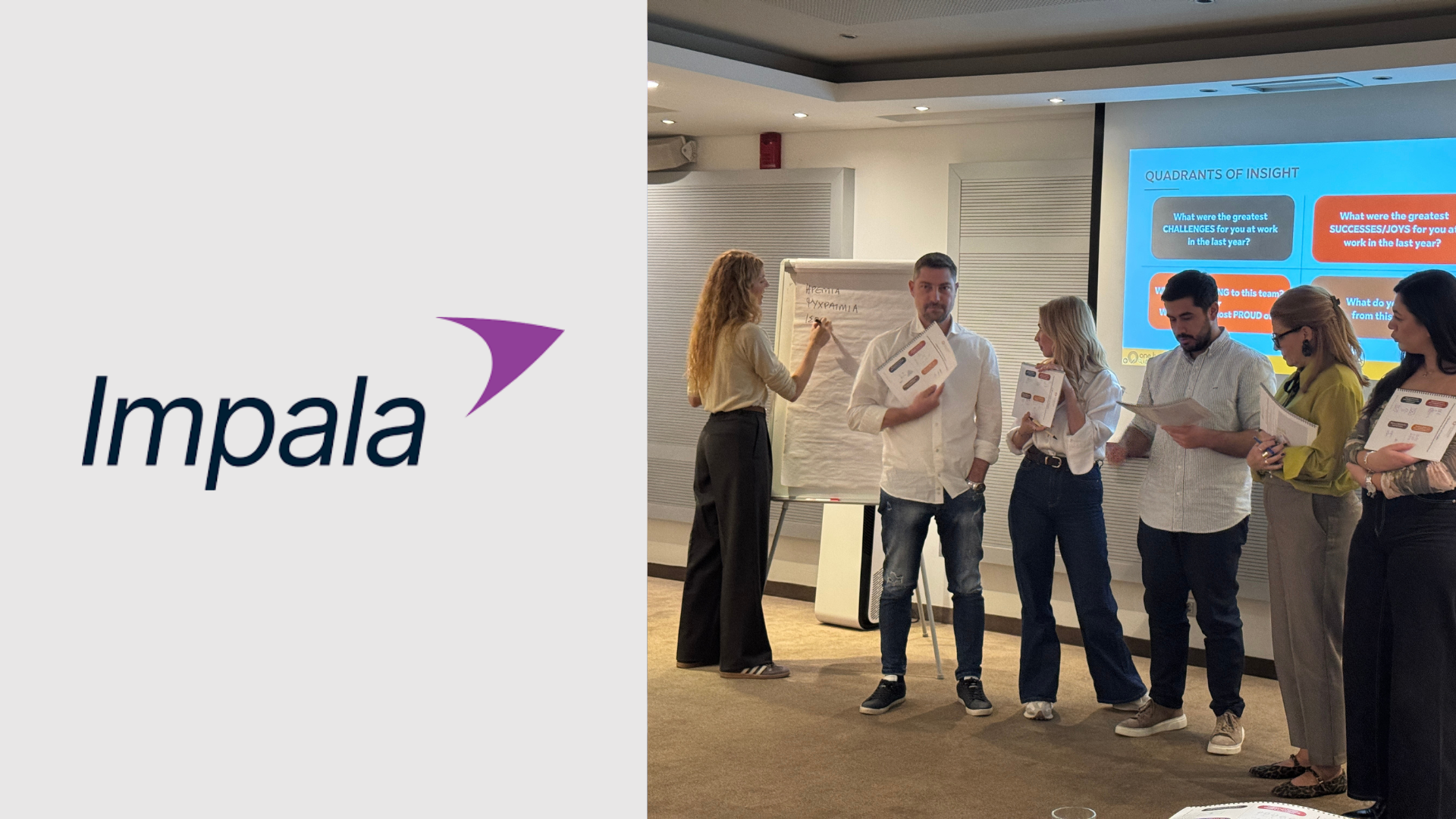
Impala Terminals, a subsidiary of Trafigura, engaged One Breath to create a training for their team offsite exploring trust as a critical driver of collaboration, autonomy, execution and excellence.
The team operates in a complex, high-accountability environment where speed, coordination, and reliability are critical. As the organization continues to grow and evolve, one underlying question surfaced clearly: How do we strengthen trust so that performance, autonomy, and ownership can scale together?
The challenge
While the team was highly capable and committed, there was a shared sense that trust was being tested by increasing pressure, changing priorities, and the natural tensions between control and autonomy.
The objective of the offsite was not team bonding in the traditional sense, but a deeper, more practical exploration of trust as a two-way leadership capability, not a soft value.
Our approach
We designed and facilitated a highly interactive training focused on reciprocal trust, grounded in organizational psychology, self-awareness and real operational challenges.
The session combined:
Research-based framing on trust, psychological safety, and team performance
Structured dialogue between leaders and peers
Practical reflection on everyday behaviors that either build or erode trust
Collective sense-making, moving from insight to concrete commitments
The work was anchored in well-established findings:
Google’s Project Aristotle identified psychological safety as the strongest predictor of high-performing teams.
Research by Amy Edmondson at Harvard shows that teams where people feel safe to speak up report higher execution quality and fewer errors.
Self-awareness and mindfulness as a tool for leadership excellence and team resilience
Rather than treating trust as an abstract concept, we translated it into observable behaviors on both sides of the leadership relationship.
Key themes explored
Trust from leaders
Setting clear expectations and then stepping back
Creating space for decision-making and ownership
Sharing context and the “why” behind decisions
Being transparent about constraints, trade-offs, and priorities
Trust from teams
Raising concerns early instead of disengaging silently
Asking for clarity without assuming negative intent
Delivering consistently to earn autonomy
Recognizing the pressures and responsibilities leaders carry
This dual lens helped shift the conversation from “who should trust whom more” to how trust flows and is reinforced over time.
Outcomes
By the end of the session, the team co-created a clear, shared roadmap for strengthening trust in daily work:
Starting with small, intentional leaps of trust, observing impact and adjusting
Communicating expectations explicitly, then allowing autonomy
Sharing context openly, especially during change or uncertainty
Replacing assumptions with open, “what”-based questions
Holding consistent one-to-one conversations where concerns and information can surface safely
The result was alignment around trust as a deliberate leadership practice, not a personality trait or cultural slogan.
Impact
The offsite created a common language around trust, responsibility, and autonomy, and translated research into concrete next steps the team could immediately apply.
Trust was reframed as a strategic enabler of execution, collaboration, and maturity, supporting both performance and long-term sustainability.
If you’d like to explore how similar trust-based work can support your teams or leadership groups, check out our work and schedule an introductory call.